Starting a small herb garden indoors is a rewarding way to bring fresh flavors into your cooking and add greenery to your living space. Whether you have a spacious kitchen or just a sunny windowsill, growing herbs indoors is both manageable and enjoyable. This guide will walk you through everything you need to know to begin your own indoor herb garden successfully.
Why Grow Herbs Indoors?
Growing herbs indoors offers several benefits:
– Convenience: Fresh herbs are always available, making cooking easier and more flavorful.
– Year-round growth: Indoor conditions can support herbs throughout all seasons.
– Space-saving: Ideal for those with limited outdoor space.
– Aesthetic appeal: Herbs add beauty and fresh scent to your home.
– Health benefits: Gardening is a relaxing hobby and can improve air quality.
Choosing the Right Herbs
Some herbs are especially well-suited for indoor gardening because of their size and light requirements. Here are popular options:
– Basil: Great for cooking, requires plenty of sunlight.
– Mint: Easy to grow, but can spread quickly so keep in a separate pot.
– Parsley: Adapts well to indoor conditions with moderate light.
– Thyme: Prefers bright light and dry soil between watering.
– Chives: Tolerant of lower light and grows well in small containers.
– Oregano: Enjoys sunny spots and well-drained soil.
– Cilantro: Needs cooler temperatures and good light.
Choose herbs that you use most often and that match your available light conditions.
Selecting Containers and Soil
Container Tips
– Use pots with drainage holes to prevent overwatering.
– Size matters: small to medium pots (4 to 8 inches) are perfect.
– Consider self-watering containers if you’re forgetful about watering.
– Recycled containers like mason jars or teacups can be charming with added drainage.
Soil Choices
– Use a high-quality potting mix labeled for indoor plants.
– Avoid garden soil, which may compact and restrict root growth.
– A soil blend with perlite or vermiculite improves drainage.
Setting Up Your Indoor Herb Garden
Location, Location, Location
– Herbs generally need 6–8 hours of sunlight daily.
– Place pots near south- or west-facing windows to maximize sun exposure.
– If natural light is insufficient, use grow lights with full-spectrum bulbs for 12–16 hours daily.
Planting Your Herbs
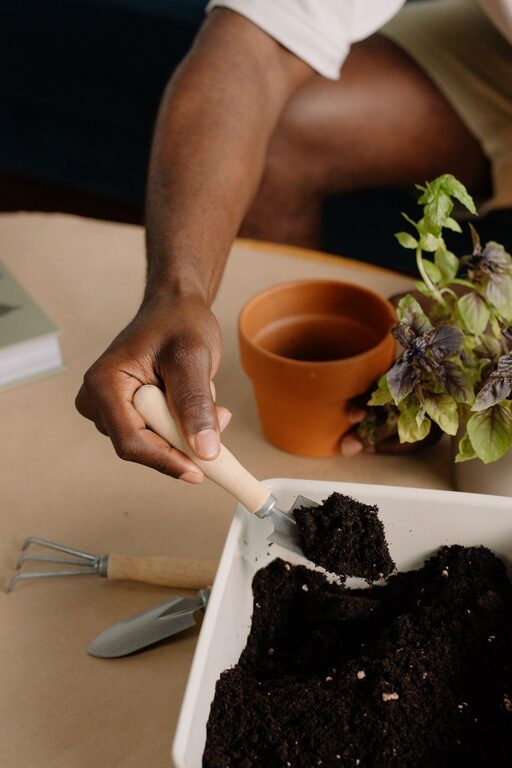
- Fill your container with potting mix, leaving about an inch of space at the top.
- If starting from seeds, follow the specific seed packet instructions for planting depth.
- For starter plants, dig a small hole and place the root ball in gently.
- Water lightly after planting to settle the soil.
Caring for Your Indoor Herb Garden
Watering
– Check soil moisture regularly; water when the top inch feels dry.
– Avoid waterlogging, which causes root rot.
– Use room temperature water to avoid shocking the plants.
Light and Temperature
– Maintain temperatures between 65–75°F for most herbs.
– Rotate pots weekly to ensure even growth.
– If using grow lights, keep them about 6 inches above herbs.
Feeding
– Fertilize every 4-6 weeks with a diluted liquid fertilizer suited for edible plants.
– Avoid over-fertilizing, which can cause excessive leaf growth with less flavor.
Pruning and Harvesting
– Regularly pinch off the top leaves to encourage bushier growth.
– Harvest herbs by cutting stems just above a leaf node.
– Avoid removing more than one-third of the plant at a time to keep it healthy.
Troubleshooting Common Issues
– Leggy growth: Indicates insufficient light; move herbs to a sunnier spot or add grow lights.
– Yellowing leaves: Often a sign of overwatering or poor drainage.
– Pest problems: Inspect leaves regularly. Use natural remedies like neem oil if pests appear.
– Wilting: May be underwatered or affected by root problems.
Additional Tips for Success
– Label your herbs to keep track.
– Group herbs with similar light and water needs together.
– Clean pots and tools to prevent diseases.
– Experiment with different containers and placements to find what works best.
Conclusion
Starting a small indoor herb garden is easier than you might think and brings many rewards. With the right herbs, containers, light, and care, you can enjoy fresh, fragrant herbs year-round right from your home. Happy gardening!
About the Author